Introduction
Are you looking for a comprehensive guide to mastering finance concepts? Look no further! Our ’31 Top Finance Cheat Sheets PDF’ is your ultimate resource. Whether you’re a student, professional, or just someone interested in finance, this document will help you understand complex financial topics with ease.
Overview of the Document
This PDF is meticulously compiled to cover a wide range of finance topics. From basic definitions to advanced financial strategies, our cheat sheets offer valuable insights and quick references. The document is designed to be user-friendly, allowing you to find the information you need quickly and efficiently.


The Content
The ’31 Top Finance Cheat Sheets PDF’ includes a variety of topics such as:
- 50 Finance KPIs
- KPIs Cheat Sheet
- Accounting vs. Finance Cheat Sheet
- ARR Cheat Sheet
- Balance Sheet Cheat Sheet
- COGS Cheat Sheet
- Discounted Cash Flow
- EBIT Cheat Sheet
- A Successful Career In Finance Cheat Sheet
- Finance & Accounting Designations Cheat Sheet
- Financial Analysis Cheat Sheet
- Financial Forecasting Cheat Sheet
- CFOs Guide to Improving Financial Reporting
- Gross Profit Cheat Sheet
- Intangible Assets Cheat Sheet
- M&A Deals Cheat Sheet
- Management Cheat Sheet
- Property, Plant & Equipment Cheat Sheet
- Purchase Price Allocation Cheat Sheet
- SaaS Finance Cheat Sheet
- Transfer Pricing Cheat Sheet
- Valuation Cheat Sheet
- Working Capital Cheat Sheet
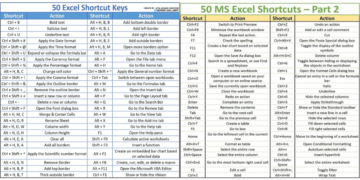
- Excel Shortcuts Cheat Sheet
- Finance Cheat Sheet
- FP&A Cheat Sheet
- Finance Checklist
- CFO Cheat Sheet
- The Accounting Cheat Sheet
- Financial Metrics Encyclopedia
- The Internal Control Checklist
Each cheat sheet is structured to provide clear and concise information, making complex topics easily understandable. Whether you’re preparing for exams, working on a project, or simply brushing up on your knowledge, these cheat sheets will be invaluable.
Why the Document?
The finance world is vast and ever-changing, making it challenging to keep up with all the concepts and strategies. Our cheat sheets serve as a handy reference tool, ensuring you have the most important information at your fingertips. They are perfect for quick revisions, on-the-go learning, and as a supplementary resource for deeper studies.
Core Finance Formulas: A One-Page Refresher
The 31 cheat sheets cover a lot of ground. These are the formulas that come up again and again across them, each with a quick example so you can check your understanding.
Profitability building blocks
| Metric | Formula | Example |
|---|---|---|
| Gross profit | Revenue − Cost of goods sold (COGS) | 500 − 300 = 200 |
| EBIT (operating profit) | Gross profit − Operating expenses | 200 − 120 = 80 |
| EBITDA | EBIT + Depreciation + Amortisation | 80 + 20 = 100 |
| Net income | EBIT − Interest − Tax | 80 − 10 − 17.5 (25% tax on 70) = 52.5 |
The accounting equation
Assets = Liabilities + Shareholders’ equity. Every transaction keeps this balanced. Buying equipment for cash swaps one asset for another; borrowing to buy it raises assets and liabilities by the same amount.
Working capital and the cash conversion cycle
- Working capital = Current assets − Current liabilities.
- Cash conversion cycle (CCC) = Days inventory outstanding + Days sales outstanding − Days payables outstanding.
Example: inventory sits 45 days, customers pay in 40 days and suppliers are paid in 35 days, so CCC = 45 + 40 − 35 = 50 days. That is how long cash is tied up in operations. Shortening it frees cash without raising a cent of new funding.
Time value of money
- Future value: FV = PV × (1 + r)n. 1,000 invested at 8% for 5 years grows to about 1,469.
- Present value: PV = FV ÷ (1 + r)n. 1,469 received in 5 years is worth about 1,000 today at 8%.
Risk and required return
- CAPM: Cost of equity = Risk-free rate + Beta × (Market return − Risk-free rate). With 4%, 1.2 and 9%: 4% + 1.2 × 5% = 10%.
- WACC = E/V × Re + D/V × Rd × (1 − Tax rate): the blended cost of all the company’s capital, used as the discount rate in DCF valuation.
Capital budgeting decision rules
| Method | Accept the project if… | Watch out for |
|---|---|---|
| Net present value (NPV) | NPV > 0 | Sensitive to the discount rate |
| Internal rate of return (IRR) | IRR > required return | Can mislead when cash flows change sign more than once |
| Payback period | Payback < target period | Ignores cash flows after payback and the time value of money |
| Profitability index | PV of inflows ÷ initial investment > 1 | Ranking projects of very different sizes |
Break-even and leverage
- Break-even units = Fixed costs ÷ (Price − Variable cost per unit).
- Contribution margin ratio = (Price − Variable cost) ÷ Price.
- Degree of operating leverage = % change in EBIT ÷ % change in sales. A higher DOL means profits swing more when sales change.
SaaS and recurring-revenue metrics
- ARR (annual recurring revenue) = Monthly recurring revenue × 12.
- Churn rate = Customers lost in the period ÷ Customers at the start of the period.
- LTV / CAC: customer lifetime value divided by customer acquisition cost. A ratio of 3 or more is a common benchmark.
Frequently Asked Questions
What is the difference between EBIT and EBITDA?
EBIT is operating profit after depreciation and amortisation. EBITDA adds those non-cash charges back, which makes it a rough proxy for operating cash flow and useful for comparing companies with different asset bases.
What is a good cash conversion cycle?
Shorter is better, but “good” depends on the industry. Retailers and subscription businesses can even run negative cycles (they collect from customers before paying suppliers), while manufacturers often have cycles of 60 days or more.
Related guides
- The Ultimate Guide to Financial Modeling PDF
- Financial Analysis Using Excel PDF
- Top Excel Formulas for Finance Grads PDF
Conclusion
In a fast-paced world, having access to well-organized and concise information is crucial. Our ’31 Top Finance Cheat Sheets PDF’ aims to provide just that. It’s an essential resource for anyone looking to gain a better understanding of finance without getting overwhelmed by technical jargon.
Download PDF
Ready to elevate your finance knowledge? Download the 31 Top Finance Cheat Sheets PDF now and start mastering financial concepts today!